Growth Marketing Success Story
Growth Starts With the Right Partner: How I Helped Shape The Giving Block’s Digital Growth Strategy With Whole Whale
When I joined The Giving Block as Director of Marketing, I knew we were operating in a unique market.
Crypto philanthropy sat at the intersection of three rapidly evolving industries: cryptocurrency, technology, and nonprofit fundraising. The opportunity was enormous, but so was the challenge. We weren’t simply trying to market a product. We were helping an entire sector understand why cryptocurrency could become an important fundraising channel—and why The Giving Block was the right partner to help them navigate it.
That meant our growth strategy had to be more sophisticated than simply driving traffic or generating leads.
We needed to build a category, educate the market, and most importantly, we needed to turn marketing activity into measurable business growth.
That’s where my partnership with Whole Whale became particularly valuable.
Whole Whale’s case study on The Giving Block captures many of the results of our work together. But behind those numbers was something I believe is equally important: the relationship between client and agency.
I didn’t view Whole Whale as an agency that I could simply hand a marketing brief to. I viewed them as an extension of my marketing team—one that I could challenge, direct, educate, and collaborate with as we worked toward The Giving Block’s larger growth goals.
Starting With the Business Goal, Not the Marketing Channel
One of the biggest mistakes organizations can make with digital marketing is starting with tactics.
“Let’s do more SEO.”
“Let’s increase our Google Ads budget.”
“Let’s create more content.”
Those aren’t strategies. They are tools.
As the marketing leader at The Giving Block, my responsibility was to start with the business objectives and then determine which marketing activities could help us achieve them.
Our primary goal was straightforward: grow The Giving Block by bringing more nonprofits onto the platform.
But achieving that goal required us to understand the entire journey.
How were nonprofit leaders discovering cryptocurrency fundraising? What questions did they have? What keywords were they searching? What information did they need before they were willing to talk to a sales representative? Which leads were actually valuable to the business?
And where were we spending money without generating meaningful results?
I brought those questions to Whole Whale.
Their job wasn’t simply to execute what I asked for. Their job was to help me answer those questions with data, strategy, and expertise.
That distinction made a tremendous difference.
Directing the Partnership Around Growth
Because I was responsible for the broader marketing strategy, I worked directly with Whole Whale to ensure their work aligned with what The Giving Block needed to accomplish as a business.
That meant having conversations that went well beyond SEO rankings and advertising metrics.
We talked about positioning, audience targeting, competitive landscape, the maturity of the crypto philanthropy market, and what a qualified lead actually meant for The Giving Block. That last point became increasingly important.
Early in a growth journey, increasing traffic and lead volume can be useful indicators. But eventually, the question changes from “How many people are we attracting?” to “Are we attracting the right people?”
That was an important evolution in our work with Whole Whale.
Together, we shifted our focus from simply generating more activity to generating better business outcomes.
SEO Became More Than a Traffic Strategy
Organic search was particularly important because of the nature of The Giving Block’s market.
Cryptocurrency was still unfamiliar to many nonprofit professionals. That created an interesting marketing opportunity: the questions people were asking in search engines were often the same questions we needed to answer as a brand.
How can nonprofits accept cryptocurrency? Can nonprofits accept Bitcoin? How does crypto fundraising work? What are the tax implications of donating cryptocurrency? How can universities or faith-based organizations fundraise with crypto?
These weren’t just SEO keywords.
They represented real questions from prospective customers.
So I worked with Whole Whale to make education a central component of our organic growth strategy.
The goal was to create content that could simultaneously capture demand and create demand.
That approach helped The Giving Block establish a stronger presence around the emerging category of crypto philanthropy while giving nonprofit leaders useful resources that could help them understand the opportunity.
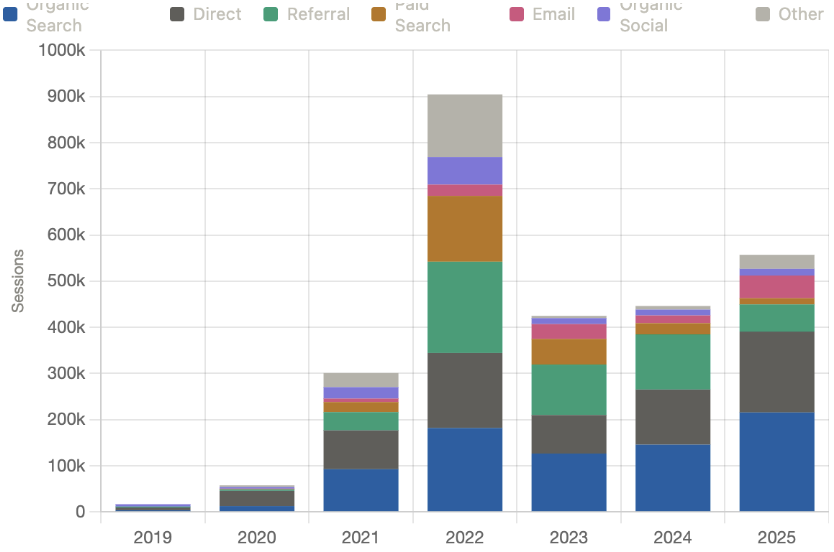
According to Whole Whale’s analysis, organic sessions grew 44% year over year in 2025, with organic search accounting for more than 39% of all website traffic.
For me, that result represented more than an SEO win. It demonstrated that our strategy of educating the market could also become a scalable growth engine.
Making Paid Advertising Work Harder
Our approach to paid advertising followed the same philosophy.
I wasn’t interested in simply spending more money to generate more leads. I wanted to understand whether we were reaching organizations that had a legitimate reason to consider The Giving Block.
That meant working closely with Whole Whale to rethink our paid search strategy, identify opportunities within Google Ads, and improve how we measured conversion quality.
The results were significant.
In 2024, Whole Whale’s paid search optimizations generated a 46% increase in conversion volume and a 243% increase in conversion rate while reducing ad spend by 61%. In 2025, qualified leads generated through Google Ads increased another 116%, while ad spend declined by an additional 28%.

Those numbers illustrate something I care deeply about as a marketing leader: growth doesn’t necessarily mean spending more.
Sometimes growth comes from becoming smarter about where you spend, who you target, and how you measure success.
Building the Infrastructure to Prove Marketing’s Value
Another important part of our collaboration was analytics.
As a marketing leader, I wanted to be able to connect our digital marketing efforts to actual business outcomes.
It isn’t enough to tell an executive team that website traffic increased 20%.
Did those visitors become leads?
Were those leads qualified?
Did they become opportunities?
Did marketing influence revenue?
To answer those questions, we established more robust GA4 analytics, lead-quality tracking, and reporting dashboards that gave our team greater visibility into the qualified pipeline.
This led to the development of a Google Data Studio dashboard that will integrate our GA4 data, with Hubspot, and Google Ads to efficiently answer questions for leadership about the performance of our campaigns.
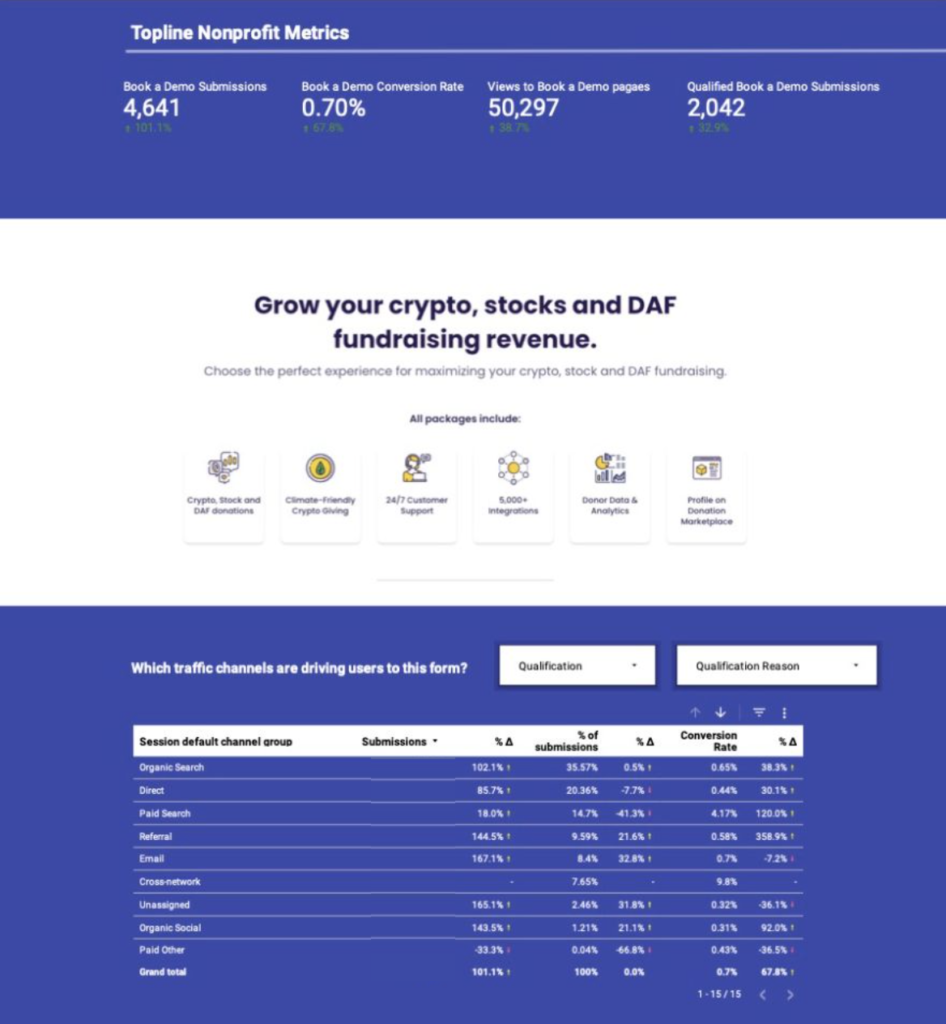
This changed the nature of the conversation.
Instead of discussing marketing performance in isolation, we could have more meaningful conversations about how marketing contributed to growth.
That is the kind of marketing infrastructure I believe every growth leader should strive to build.
The Best Agencies Make Their Clients Better
Perhaps the most valuable part of my relationship with Whole Whale wasn’t any individual campaign.
It was the knowledge transfer.
I have worked with Whole Whale across multiple organizations, and one of the things that has consistently impressed me is their willingness to explain the why behind their recommendations.
They didn’t simply say, “Here’s what you should do.”
They helped me and my team understand why it mattered.
That included SEO, paid advertising, analytics, reporting, and broader digital strategy.
As a marketing leader, that’s incredibly valuable.
When you work with an agency, you should absolutely expect them to bring expertise you don’t have internally. But I believe the best partnerships should also leave your internal team stronger than when the relationship began.
That was certainly my experience with Whole Whale.
What I Learned From the Partnership
Looking back at our work together, one lesson stands out:
The best agency relationships aren’t built around outsourcing. They’re built around partnership.
As the client, I had a clear responsibility to articulate where The Giving Block needed to go. Whole Whale brought the technical expertise, strategic perspective, and executional capabilities to help us get there.
I challenged them, and they challenged me. We questioned assumptions and looked at the data to adjust our strategy as the market changed.
And we continued to connect our marketing efforts to the larger business objectives.
That collaboration helped The Giving Block generate meaningful growth, including a 44% increase in organic sessions, a 116% increase in qualified leads through Google Ads, and a 56% overall increase in high-value qualified leads.
But the numbers tell only part of the story.
For me, the real success was creating a marketing partnership that could evolve with the business.
Crypto philanthropy was changing rapidly. Search behavior was changing. Google’s algorithms were changing. AI was changing the way people discover information. And nonprofit organizations were becoming increasingly sophisticated buyers.
Our marketing strategy had to change with them.
That’s what made working with Whole Whale so effective.
I wasn’t looking for a vendor to execute a predetermined list of tactics. I was looking for a strategic partner that could help me translate ambitious growth goals into measurable marketing programs—and help my team become better marketers along the way.
That is what a true agency-client partnership should look like.